
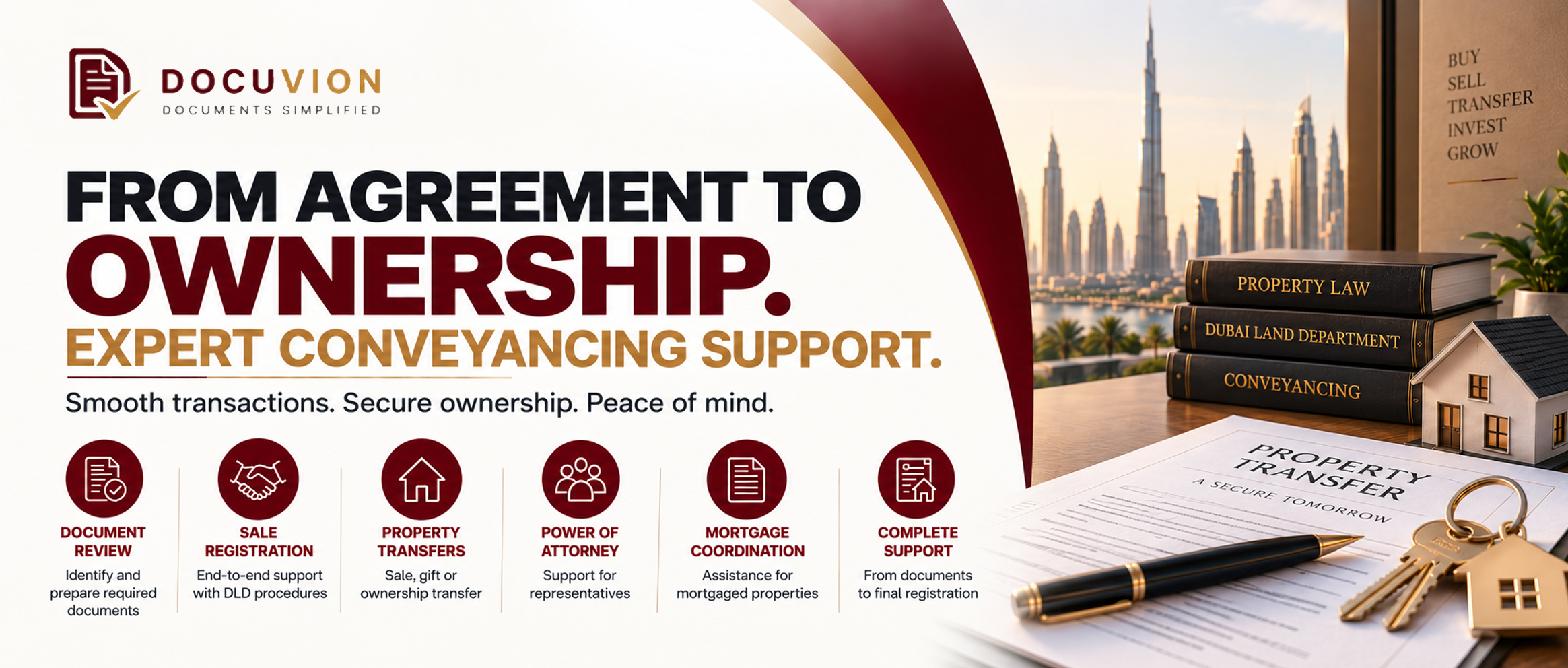
A property deal may begin with an agreement between a buyer and seller, but the transaction is not complete at that point.
The ownership records, documents, approvals, and registration still need to be handled properly. This is where conveyancing becomes an important part of the property transaction.
Understanding what happens after the agreement can help both buyers and sellers prepare for the next steps.
What Happens After the Property Deal?
Once the buyer and seller agree on the transaction, the next stage involves completing the formal requirements for the transfer.
In Dubai, property sale registration is handled through the Dubai Land Department. The DLD's property sale registration service covers the registration of a sale between the seller and buyer, including transactions involving land, property, and completed real estate units.
This is one of the key areas where conveyancing helps keep the transaction organised.
Document Preparation Comes First
Before a transaction can be completed, the required documents need to be available and accurate.
For a standard Dubai property sale, DLD lists documents such as:
-
Emirates ID for the seller and buyer
-
Valid passport for non-resident foreign buyers or sellers
-
Developer NOC, where applicable in freehold areas
-
Legal Power of Attorney when a representative is acting for a party
The exact documents can vary depending on the property and transaction.
A proper conveyancing process, therefore, starts by identifying what is required before the parties reach the registration stage.
What If Someone Cannot Attend?
A property transaction does not always require every party to be physically present.
Where an owner or another party is represented, an official Power of Attorney may be required.